Squad Rotation in English Football: Managing Three Competitions Without Losing Rhythm
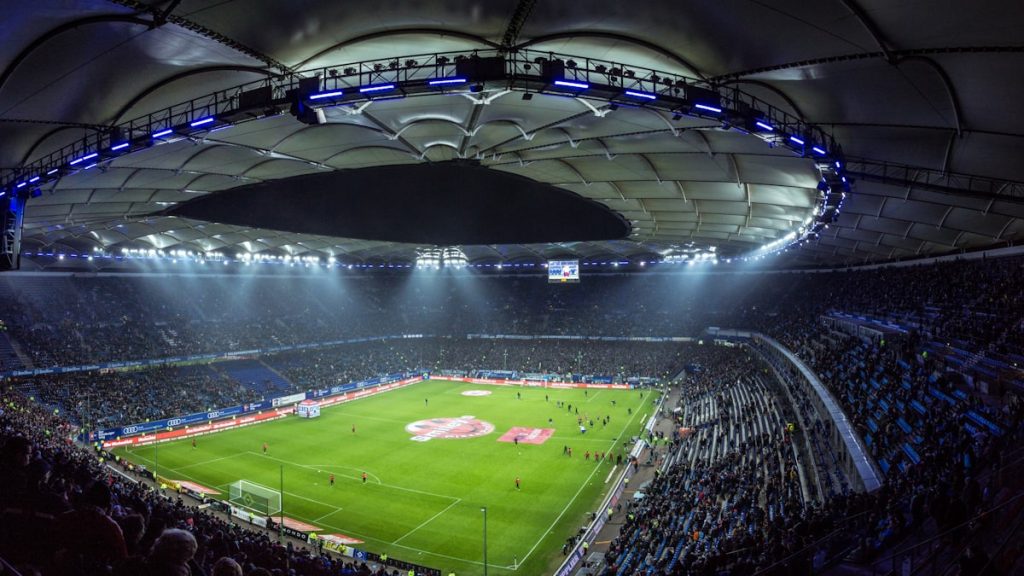
Squad rotation in the Premier League is not about resting tired players; it is about banking minutes early so a club can contest three competitions without losing the rhythm that actually wins them.
The arithmetic that makes rotation unavoidable
A Premier League season is thirty-eight matches. Add two domestic cups, and a club with deep cup runs plus a European campaign can pass sixty fixtures — a figure that was already demanding before the Champions League’s league phase expanded the European calendar. The new format gives each participating club eight matches in the league phase rather than the six the group stage required, and because more of those matches are competitive into the final rounds, strong clubs are less able to rest players in Europe than they once were. The fixture list, not the manager’s philosophy, is the first cause of rotation.
The congestion is not evenly spread. English football compresses its most crowded periods into December and January, when league fixtures pile up around cup ties and, for the biggest clubs, European knockouts approach. International breaks fragment September, October and November, sending players across continents and returning them to club duty with varied levels of fatigue. A manager who waits until the congested weeks to rotate is already late; the squad has to arrive at Christmas with most of its senior players having played fewer than the maximum possible minutes.
This is why rotation is best understood as resource management. Minutes are the resource. Every appearance uses some of a player’s available load for the season, and the manager’s job is to spend those minutes where they earn points while keeping enough reserve for the matches in April that decide things.
Rotation is a rhythm problem before it is a fitness problem
The common framing — that rotation exists to prevent injury — captures only half of it. Players who do not play lose sharpness, and the loss shows up in the details: the timing of a first touch under pressure, the angle of a covering run, the willingness to receive the ball with a defender at his back. A winger who has started once in five weeks will usually look leggy in his next start regardless of his gym work, because match rhythm is trained by matches.
Why fringe players struggle in isolated starts
Research and coaching experience point the same way: players perform best in sequences of matches, not in scattered ones. The squad player brought in for a single cup tie faces a double burden — he must perform while short of rhythm, in a team whose usual combinations around him are also altered. The best-managed rotations therefore come in clusters. When a manager knows a run of four matches in eleven days is coming, he plans changes across all four rather than fielding a full-strength side twice and a patchwork side twice, so that each changed unit still contains enough senior spine to function.
The starting eleven is a fiction the table keeps
Clubs increasingly talk about a first-choice group of fourteen to sixteen players rather than eleven, because the difference between the best squad and a merely good one is measured in the quality of the fifth defender and the third central midfielder. That framing changes recruitment as much as it changes selection: the club buying a rotation option is really buying insurance against a specific week in February, and the price of that insurance is why squad building at the top of the game has become so expensive.
Why defenders are the hardest players to rotate
Attacking rotation is relatively forgiving. A changed forward line disrupts patterns but the risk is wasted chances; a changed defence risks goals, and goals decide matches. Defensive organisation depends on small, constantly negotiated details — who steps out to the ball carrier, who covers behind, how the line drops when the full-back is beaten — that are rehearsed between specific individuals. Replace one centre-back and the other two members of the back line must recalibrate, often mid-match, against opponents whose entire game plan is to attack the seam between unfamiliar defenders.
Goalkeeper rotation is rarer still, and almost inverted in logic.
The impossible job of the second-choice goalkeeper
A goalkeeper can play every match for a decade because the positional demands differ from outfield players, but a cup goalkeeper who plays four matches a season is effectively maintaining readiness without rhythm — one of the most difficult jobs in the sport. Some managers now deliberately schedule their second-choice keeper into defined rounds of the cup competitions months in advance, so the decision never looks like a reaction to one poor performance.
Full-backs sit in between. The position’s physical demands — repeated high-intensity sprints up and down the flank — make rotation medically sensible, and many clubs treat the two full-back positions as the most shareable in the team. Yet even here, the defensive coordination with the wide midfielder ahead of them argues for partnerships rather than individuals, which is why some sides rotate the pair rather than the player.
Where rotation is cheap and where it is expensive
The risk attached to changing a position varies predictably, and managers who internalise this hierarchy rotate more successfully than those who rotate by simple fatigue numbers.
| Position | Rotation cost | Why |
|---|---|---|
| Wide forwards and wingers | Low | Duties are more individual; losing one disrupts patterns but rarely structure. |
| Strikers | Low to moderate | Interchangeable profiles exist, but goal rhythm is fragile and penalty-box timing suffers without matches. |
| Central midfield | Moderate | Highest physical load and densest pressing actions, but pairing changes alter the team’s whole balance. |
| Full-backs | Moderate | Physically demanding and shareable, yet dependent on coordination with the wide attacker. |
| Centre-backs | High | Partnership-based communication; errors convert directly into chances conceded. |
| Goalkeeper | Highest | Single position, no natural rotation partner, and continuity is worth more here than anywhere. |
Workload data has sharpened this hierarchy rather than replaced it. Clubs track sprint distance, high-speed running and accumulated load through the season, and that data is genuinely useful for flagging the muscle-injury risk that follows rapid spikes in load. But the data cannot tell a manager what it costs a back four to lose its most communicative member for one Tuesday night in the cup, and that cost is frequently higher than the physical benefit of the rest.
How managers sequence rotation across a season
The most successful handlers of squad minutes share habits that are visible season after season. They front-load rotation into the fixtures where the price of a dropped level is lowest: early cup rounds against lower-division opponents, and the less glamorous league-phase matches in Europe. They protect senior players from the trap of the one-off appearance, preferring runs of two or three consecutive starts so that whoever comes in arrives with rhythm. And they treat the days around international breaks as natural rotation points, because the returning squad’s fatigue levels are uneven and the fixture immediately after a break rewards fresh legs more than settled combinations.
Sequencing also has a psychological dimension that gets less attention. Players judge their situation by whether minutes arrive when promised, and a squad that believes the manager’s rotation is principled — planned, explained, consistent — trains better than one that suspects selection is arbitrary. Managers who publicly frame rotation as collective management rather than individual punishment preserve the goodwill that makes a deep squad function. Those who rotate reactively, dropping players after poor results and recalling them after good ones, tend to end up with neither rhythm nor trust.
The demands only grow. The expanded European calendar at Champions League level has already lengthened the list of weeks in which a top club plays twice, and domestic cup scheduling offers little relief. Checking the fixture schedule for any ambitious club now tells you as much about its rotation plan as its squad list does — the two documents, read together, are the real selection policy.
Key takeaways
- Rotation exists because of the fixture calendar, not because of tiredness: a club contesting four competitions can pass sixty matches in a season, and the expanded Champions League league phase has added further load.
- Minutes are a seasonal resource to be budgeted; the best managers bank reserve early rather than reacting to the December congestion.
- Players need sequences of matches for rhythm, so rotations work best in planned clusters rather than isolated one-off appearances.
- Rotation risk is positional: wide attackers are cheap to change, centre-backs and goalkeepers expensive, because defensive continuity converts directly into goals conceded.
- Perceived fairness matters — a squad that trusts the rotation policy trains and performs better than one that reads selection as punishment.
Frequently asked questions
How many matches do top Premier League clubs play in a season?
A league season is thirty-eight matches, and a club that goes deep in both domestic cups and reaches the late stages of a European competition can pass sixty. The exact total depends on cup draws, but the trend across recent seasons has been upward as European formats have expanded.
Why don’t managers simply play the best eleven every week?
Because the physical cost is unsustainable and the injury risk rises sharply when load spikes. Squad players also need competitive minutes to stay sharp, so a club that fields its strongest eleven until players break down usually ends the season with a weaker team than one that has shared the load deliberately.
Does rotation hurt team chemistry?
It can, if it is unstructured. Defensive partnerships suffer most from disruption, which is why careful managers rotate in clusters and protect the spine of the team. Attack-minded positions absorb changes far more easily, so the chemistry cost depends heavily on which positions are being rotated.
What is load management in football?
Load management is the practice of tracking each player’s physical output — training intensity, match minutes, high-speed running — and adjusting it across a season to reduce injury risk. It informs rotation decisions but does not make them alone, since it cannot measure tactical familiarity or partnership cohesion.
The squad list is the real starting eleven
The durable lesson from a decade of congested calendars is that the unit of competition is no longer the eleven but the whole professional squad. Clubs that recruit a genuine eighteenth player rather than a decorative one, that build defensive partnerships deep enough to survive two changes at once, and that sequence their rotation months ahead of the congestion are the ones still competing on three fronts in April. The alternative — a strong eleven played into the ground and a bench treated as an emergency service — has been tried repeatedly, and it fails in the same way every time: not in December, when the warnings are loud, but in the quiet weeks of spring when the points that decide the season are suddenly unavailable. A club’s squad page, read with the calendar in mind, predicts more than any single result does.