The Deep-Lying Playmaker: What Makes a Modern Midfield Metronome Elite
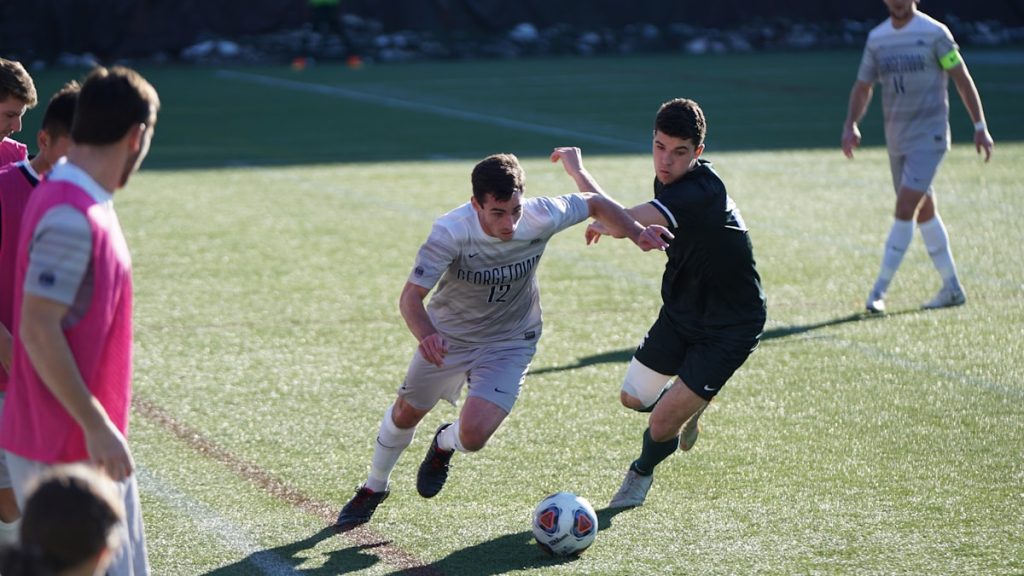
The deep-lying playmaker is football’s most demanding supporting role: a midfielder who operates in front of his own defence, receives under pressure from every direction, and decides — with one pass or one withheld pass — how the entire match breathes. Understanding what separates an elite number six from a competent one starts with the skills this role actually requires.
The job description: what a deep playmaker is for
Every phase of a team’s possession flows through the deepest central midfielder. He is the outlet when the defenders are pressed, the link when the ball must travel from one flank to the other, and the switchboard when the attack needs redirecting. Because he typically receives with his own goal behind him and opponents hunting the turnover, the role punishes every technical and mental weakness more severely than any other position on the pitch. A winger who miscontrols on the touchline loses the ball near a throw-in; a deep playmaker who miscontrols in front of his centre-backs loses the ball where goals are conceded.
The position also carries the least forgiving defensive brief outside central defence. When possession is lost, he is usually the first screen in front of the back line, responsible for delaying counters and stopping passes into the opposition striker. The great exponents therefore combine two profiles that rarely coexist: the passing range of a number ten and the positional intelligence of a auxiliary centre-back. It is why the role took so long to be recognised as a specialism at all — for decades, deep midfielders were judged on industriousness, and only relatively recently has the game fully valued what the cerebral version contributes.
Receiving on the half-turn: the skill that separates levels
Watch an elite deep playmaker and the first thing to study is not his passing but his body shape. The best receive on the half-turn — shoulders open to the field, both feet available, the whole pitch in view the instant the ball arrives. A player who receives facing his own goal must first take a touch, turn, and then assess, and each of those seconds invites the press. A player who receives already facing forward can play immediately, which converts pressure into an advantage: the pressing opponent arrives exactly on time to find the ball has already gone.
Scanning before the ball arrives
Half-turns only work if the player already knows what he will do with the ball, and that knowledge comes from scanning — the repeated checks over both shoulders in the seconds before receiving. Analysts who have studied elite midfielders’ head movements have consistently found they look around far more often than average players, and crucially that the scans happen before the pass travels to them, not after. The scan answers three questions: where is the nearest presser, which opponent is closing the forward pass, and where is the third man? By the time the ball reaches him, the elite number six has already played the next pass in his head and is simply executing a decision rather than making one.
This is trainable, which is why scanning exercises — cones, captured images, coaches calling out jersey colours mid-drill — now appear at every professional academy. But the habit must survive real pressure, and that is what makes the skill rare: under pressing, most players’ eyes fix on the ball. The ones who keep their heads moving are the ones who keep the ball moving.
Tempo control: deciding when the match breathes
The most under-appreciated function of the deep playmaker is tempo. A team’s rhythm — when it accelerates, when it circulates, when it deliberately slows — is set from the base of midfield, because that player touches the ball more often than anyone and touches it in positions from which every option is available. Knowing when to play the safe square pass and when to risk the line-breaking ball is the role’s central judgment, and it depends on reading factors far from the ball: the opponent’s fatigue, the state of the scoreline, whether the block ahead is shrinking or stretching.
The great tempo-controllers make the game look slower than it is, because their decisions remove urgency from dangerous moments. The pattern that marks them out is the withheld pass: recognising that the defence is set, playing instead a short pass that draws the block out slightly, and only then releasing the forward ball into the gap the movement created. Circulation without purpose is possession for its own sake; the deep playmaker’s art is circulation as preparation, each safe pass quietly repositioning the opponent for the one that matters.
Positional discipline and the rest defence
The third pillar is restraint. A deep playmaker’s value depends on being in the right place, and the right place is rarely where the ball is exciting. He holds the base of midfield while teammates attack, keeps a screen in front of the centre-backs, and occupies the central lane precisely because counters travel through the centre. When his team commits players forward, he becomes the anchor of the rest defence — the structure that catches transitions — and the discipline this demands is severe. The role offers almost no goals, few assists, and no highlight moments; its compensation is that the team’s entire balance rests on its presence.
This is why poor imitations of the role are so visible. A deep playmaker who ventures into the box leaves the counter-press without its first interceptor; one who drops between the centre-backs at the wrong moment compresses his team’s own build-up. The positioning is not conservative by temperament but by function: the spaces he guards are worth more than the ones he abandons, every single time, and the best players in the role seem to know it instinctively.
Two schools: the conductor and the destroyer-conductor
Historical exponents divide usefully into two archetypes. Andrea Pirlo and Xabi Alonso represent the conductor school: players whose long diagonals, set-piece delivery and passing angles made them the game’s authors from deep. Pirlo reinvented himself as a regista in Italian football, dictating matches from a position between the defence and midfield; Alonso did the same work in Spain, Germany and England, adding an almost metronomic reliability in possession. Both depended on positional structures built around them — teammates covering their defensive burden so their passing could be maximised.
Sergio Busquets and Paul Scholes, in their later careers, represent a related but distinct interpretation: the pivot who reads the game defensively as brilliantly as he distributes. Busquets, in particular, defined the modern single-pivot role in the possession-based systems of his era — one-touch security, cover shadows, and an uncanny sense for killing counters before they started. The archetype’s lesson is that there is no single template: what unites the greats is not a passing style but decision superiority — the consistent choice of the pass the situation actually demands, whether that is a forty-metre switch or a five-metre security ball. Fans studying how different leagues reward the role can compare possession-heavy sides in La Liga with the transition-heavy teams elsewhere in Europe, where the same role performs very different work.
What the modern press demands of the role
Contemporary football has raised the role’s difficulty dramatically. Widespread high pressing means the deep playmaker now receives in zones where three opponents may converge, and build-up shapes are designed specifically to get him on the ball — a back three plus a double pivot, or a goalkeeper joining the first line, all exist partly to create safe receiving conditions for the deepest passer. The role has consequently evolved: some modern interpretations push the pivot higher or split him into a double six; others ask him to drop between the centre-backs in build-up, effectively becoming a third defender before advancing into his screening duties.
The physical and mental load is enormous, which is why squad construction treats the position as untouchable — a deep playmaker is rarely rotated, because nobody else in the squad performs the function. His availability shapes a team’s whole season, and his form shapes every result: a number six misplacing his radar is the single most expensive individual decline a side can absorb. Tracking that influence is easier than ever, with live match data now exposing pass volumes, progression and turnover locations that reveal exactly how much a game ran through the base of midfield.
Key takeaways
- The deep-lying playmaker combines two rare profiles: the passing range of a creative number ten and the positional intelligence of an auxiliary defender.
- Receiving on the half-turn, with shoulders open to the field, is the physical skill that separates elite exponents from ordinary deep midfielders.
- Scanning — repeated shoulder checks before the ball arrives — lets the player execute decisions rather than make them under pressure.
- Tempo control is the role’s central art: safe circulation as preparation, with the line-breaking pass released only once the block has been drawn out.
- Positional discipline anchors the rest defence; the spaces the number six guards are worth more than any space he could attack.
Frequently asked questions
What does a deep-lying playmaker do in football?
He is the deepest central midfielder, receiving in front of the defence and responsible for linking defence to attack through passing. The role covers build-up security, tempo control and the first layer of protection against counter-attacks. The best exponents decide when their team accelerates and when it circulates, and nearly every phase of possession runs through them.
What is the difference between a regista and a holding midfielder?
A regista — the Italian term for the deep-lying playmaker in the Pirlo tradition — is primarily a distributor who dictates play from deep and needs teammates to carry his defensive workload. A holding midfielder, in the Busquets mould, splits his value between distribution and defensive screening, sacrificing some creative range for defensive security. Many modern systems blend the two, but the archetypes describe genuinely different priorities.
Why is receiving on the half-turn so important?
A player who receives facing forward can play his next pass immediately, while one who receives facing his own goal must touch, turn and then assess — losing the seconds in which opponents close him down. The half-turn converts pressure into opportunity because the pressing player arrives to find the ball already gone. It depends on prior scanning, since the player must know his options before the ball arrives.
Who are the best examples of deep-lying playmakers?
Historically, Andrea Pirlo and Xabi Alonso defined the conductor school, dictating matches with range and angles from deep positions. Sergio Busquets defined the defensive-pivot interpretation, pairing one-touch security with elite counter-pressing intelligence, while Paul Scholes showed the role could be combined with box-to-box work earlier in a career. All shared decision superiority rather than any single passing style.
Why the role keeps surviving football’s revolutions
Each tactical era was supposed to make the deep playmaker obsolete. Direct football was meant to remove him; high pressing was meant to hunt him out of existence; athletic double pivots were meant to replace his craft with running. Instead the role has absorbed every challenge and grown more valuable, because each of those revolutions increased the pressure on exactly the moments he controls. The more the game presses, the more precious the player who can play through a press; the faster the transitions, the more valuable the screen who kills them at source. The modern evolution — pivots dropping into back-threes, split sixes, goalkeepers as auxiliary deep passers — is the role adapting again rather than dissolving. What has never changed is the qualification that matters most: seeing the game early, and being calm enough to pass the ball where the game is about to go rather than where it has been. For more positional breakdowns in this series, the site’s player pages and analysis coverage track how individual exponents are currently interpreting football’s most quietly decisive role.