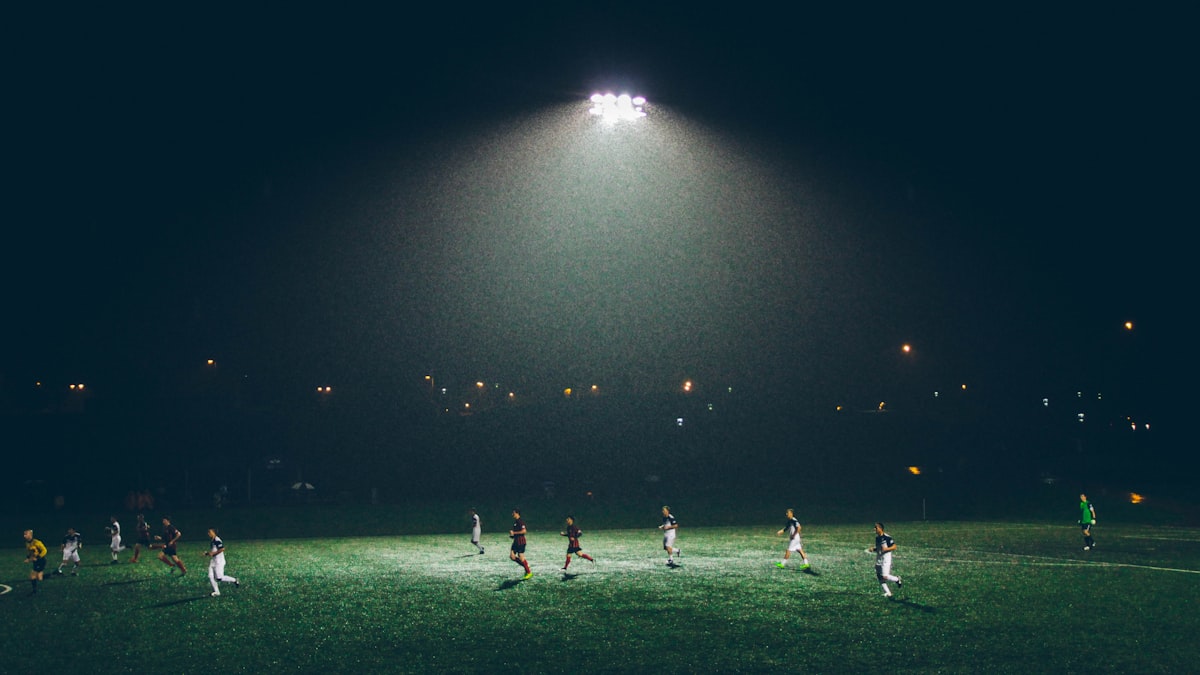
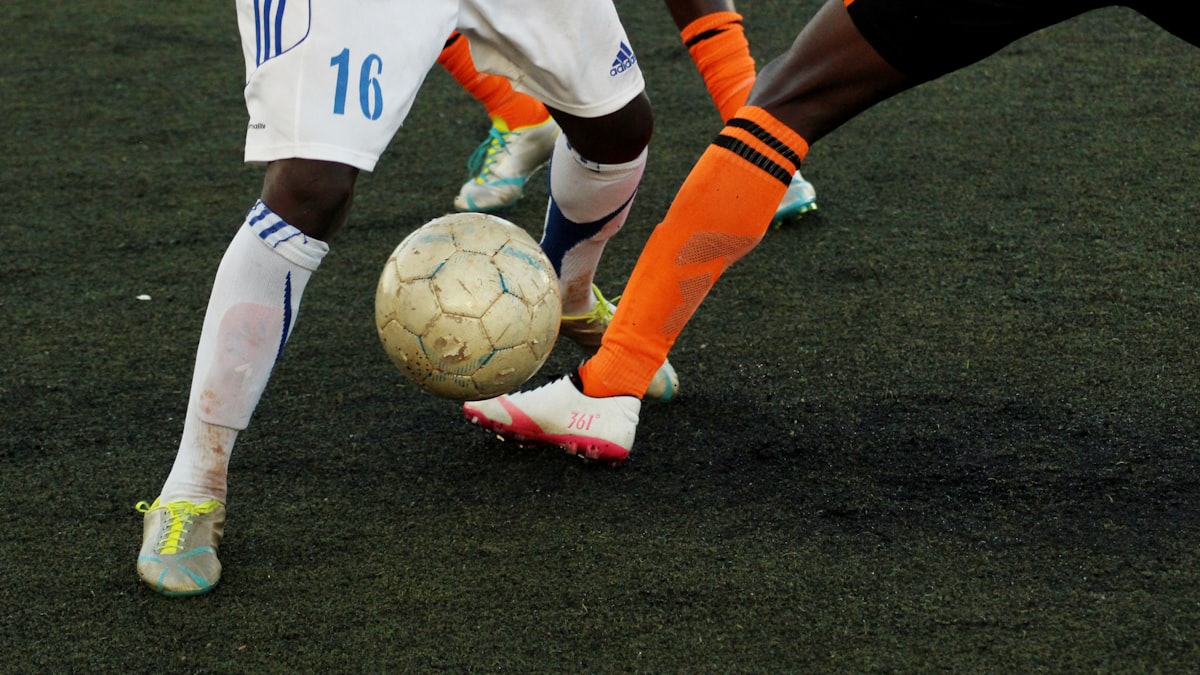
The inverted winger role turned wide players into chief goalscorers, rebuilt the full-back position around them, and quietly changed what defending means on the flanks. This piece explains why the shift happened, what the role demands, and what it costs a team.
For most of football’s history, the wide attacker had one job: receive near the touchline, beat his full-back, and deliver a cross. It was a role defined by territory. The winger owned the widest strip of grass, and his value was measured in deliveries into the box.
Three developments dismantled that arrangement. First, defending got organised. Modern low blocks defend the penalty area rather than the pitch, packing the centre and conceding wide zones deliberately — and a cross into a crowded six-yard box is the lowest-probability pass in the sport. Second, the data revolution put a number on what coaches already suspected: shots taken from central positions convert far more often than shots or headers from acute angles, which is precisely where crosses end up. Third, pressing raised the tempo of transitions, and a winger camped on the touchline is often the furthest player from a counter-attack’s decisive zone.
The answer to all three problems turned out to be the same player wearing different boots. Put the wide attacker on his opposite foot, let him start narrow and run inside, and the touchline winger becomes an auxiliary striker with a running start.
The inverted winger is not simply a winger told to cut inside. The role has its own craft, and the players who master it share a set of habits that are easy to miss at full speed.
The signature movement is late rather than constant. A touchline winger wants the ball early and often; an inverted winger frequently spends phases of an attack hiding, holding a position between the opposition full-back and central midfielder where neither feels responsible for him. The danger arrives when the ball is recycled or switched: he attacks the box from deep, off the shoulder of a defender who has been watching the ball for ten seconds. Defending that movement is a scanning problem, and defenders who ball-watch pay for it immediately.
Playing a right-footed player on the left (or a left-footer on the right) changes the geometry of everything he does. Cutting inside onto his strongest foot opens the body toward goal rather than away from it, and the natural shot shape bends toward the far post — the side goalkeepers protect last. The same body orientation also favours the disguised pass: a slipped ball through the inside-channel is available without any adjustment of the hips, because the player is already facing the centre of the pitch.
This is why the role rewards certain profiles and punishes others. A one-footed winger becomes highly predictable once defenders learn to show him onto his weak side and step across the cutting lane. The elite versions are two-footed enough that “show him outside” is itself a risk, which is what makes them nearly unmarkable.
Inverting the winger removes the team’s natural source of width, so someone must supply it — and that someone is almost always the full-back.
The overlap is the old solution: winger holds the ball, full-back sprints outside, defender commits, cross follows. The inverted game added the underlap, which suits the geometry better. When the winger drifts inside with the ball, he drags the opposition full-back with him, and the run of the overlapping defender into the vacated channel forces the defending midfield to make an impossible choice — follow the runner and open the centre, or leave him free to receive a through-ball behind the defensive line.
The best wide partnerships treat these runs as a conversation rather than a script. The winger’s body shape decides which run the full-back makes, and the defender’s positioning decides the winger’s next action. Opposition analysts know this, which is why well-drilled defences screen the underlap lane with a holding midfielder rather than asking the full-back to fight two battles alone.
Every tactical choice buys something and sells something. The inverted winger’s invoice arrives on the counter-attack.
Because he starts narrow, the space behind him on the touchline is unguarded at the moment possession turns over. The opposition’s wide player — often an orthodox winger himself — receives with grass in front of him, and the team’s own full-back is exposed to a one-on-one with no covering width. Teams that play inverted wingers therefore tend to defend in one of two compensating ways: the ball-side midfielder tucks across to shadow the flank, or the whole block shifts toward the ball, accepting a bigger gap on the far side and trusting the back line to survive a switch of play.
Neither answer is free. The tucked midfielder is a midfielder no longer controlling the centre; the aggressive shift leaves the defence vulnerable to diagonal balls. This is the quiet trade at the heart of the modern game: teams have decided that the goals an inverted winger creates outweigh the chances conceded through the channel he abandons. The arithmetic generally supports them, but only for squads with disciplined rest defence behind the attack — without it, the most thrilling weapon in the side becomes its most expensive liability.
It is tempting to date the role to the modern analytics era, but football has been here before. The inside-forwards of the mid-twentieth century — the inside-right and inside-left of the old 2-3-5 pyramid — were wide-nominated players whose real work happened in the inside channels, feeding the centre-forward and finishing moves themselves. When defensive systems hardened in the 1950s and 1960s, the inside-forward was pushed back into midfield or out to the touchline, and the winger-with-a-cross became the default for decades.
The modern revival simply re-found the old position with new tools. The left-footed right-sided archetype of the 2010s — associated above all with Arjen Robben’s long career of near-post cuts at Bayern Munich — became the template, and Lionel Messi’s evolution at Barcelona from touchline dribbler into a right-sided forward who scored most of his goals in the centre is the fullest expression of the idea. Contemporary stars such as Mohamed Salah at Liverpool built their records on the same blueprint, while coaches from Pep Guardiola to Jürgen Klopp treated the inverted wide forward as structural, not decorative.
An inverted winger is a wide attacker played on the side opposite to his stronger foot, so that he naturally drifts infield onto his best foot. Instead of hugging the touchline and crossing, he cuts inside to shoot, combine or slip passes through the inside channels, functioning as an auxiliary striker rather than a pure provider.
It is actually their stronger side once the cut is accounted for. A left-footed player on the right flank cuts inside onto his left foot, which turns his body toward goal and opens the shooting angle toward the far post. The touchline foot becomes secondary because crossing is no longer the priority of the position.
The terms overlap heavily, and the historical inside-forward is essentially the ancestor of the modern inverted winger. In current usage, an inside forward usually describes a central-adjacent attacker who operates permanently in the channels, while an inverted winger starts in a nominal wide position and attacks the inside — the starting spot differs more than the job.
They change the defensive risk rather than simply reducing quality. Because the wide player starts narrow, the touchline behind him is open to counter-attacks, which demands structured rest defence and disciplined midfield shifting. Well-coached teams absorb this; teams that invert their wingers without covering the flank tend to concede through exactly the channel their most dangerous attacker left empty.
The deepest meaning of the inverted winger is that width itself was demoted. For a century, wide areas were occupied because the pitch had edges and someone had to stand on them. Now width is a resource that a team deploys when it wants it — sometimes through the full-back, sometimes through a late switch, sometimes not at all — and the wide attacker’s job is to be dangerous in the zones that actually decide matches.
Watch any elite side in La Liga or the Premier League and the pattern holds, with variations: some wingers start wide and arrive, some start inside and drift, but none of them simply wait by the touchline for a ball to cross. The role’s next evolution may run through the opposite problem — as more teams invert both flanks, the side that can still deliver a genuine crossing threat from deep positions becomes harder to prepare for. Old ideas in football rarely die; they wait for the cycle to bring them back as the unexpected answer. The full context of how these roles fit into wider systems is covered in our other tactical analysis, and you can watch how often the cutting lane gets used in any match’s key moments.